The short answer
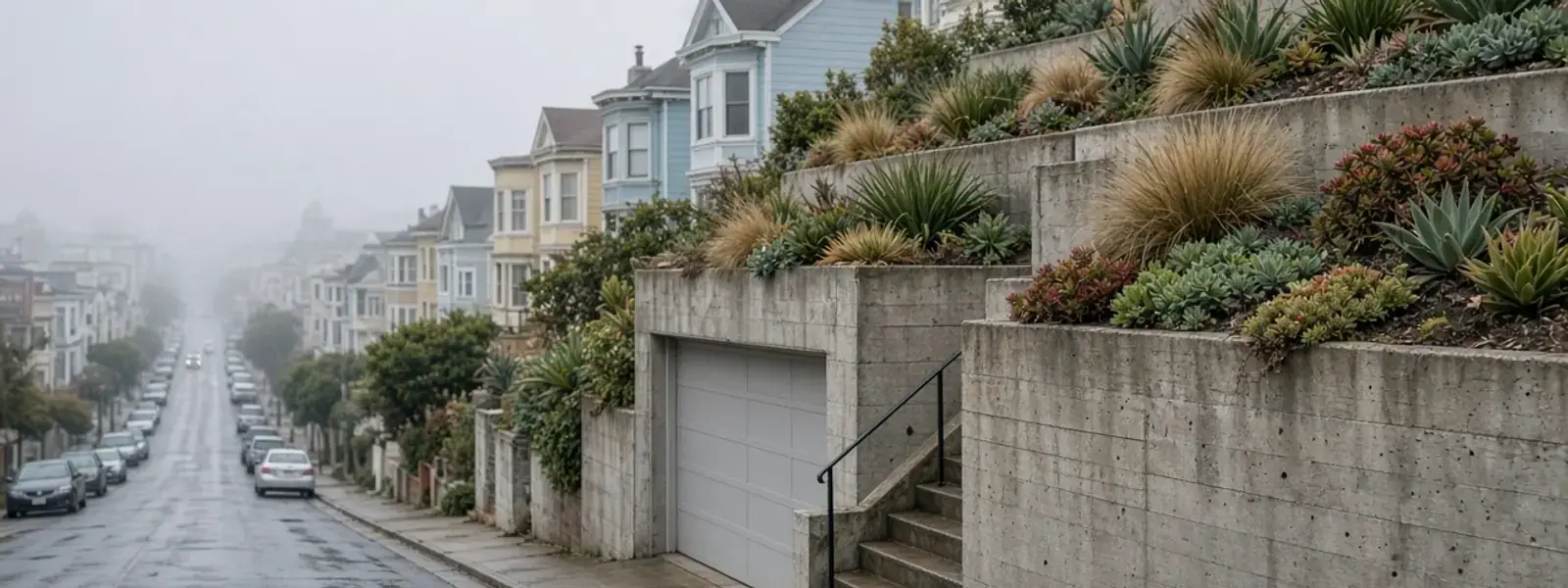
Retaining walls in Alameda are mostly low grade-change walls on a flat island: raised planters, patio terraces, driveway ramps and shoreline edges. San Fran Retaining Wall Pros builds walls in Alameda with footings sized for sandy fill, drainage suited to a high water table and materials that handle salt air.
An island with almost no hills
Alameda is flat. Most lots on the main island and Bay Farm Island are within a few feet of sea level. You won't find many tall retaining walls. What you do find are low walls that shape yards: raised garden beds, patio steps, front yard terraces and walls beside basement entries or garage ramps.
Small walls still need to be built right. In Alameda, the challenge isn't slope. It's soil and water.
Sandy fill, shallow groundwater and liquefaction
Much of Alameda is built on fill and sandy deposits. The water table is close to the surface. Parts of the island are mapped as liquefaction zones, meaning loose, wet sand can behave like a liquid in a strong earthquake.
- Excavations may fill with water and need pumping
- Sandy soil needs compaction and a stable base
- Footings need to spread load on loose or fill soil
- Drainage has to work in a high water table
- Walls near the shoreline face tide and wave exposure
For lower walls, that means a compacted base, a reasonable footing and a drain with a real outlet. See our installation page.
Salt air and shoreline exposure
Alameda is surrounded by water. Salt air affects steel and wood. Shoreline lots may also face sea level rise and storm surge, which affects wall design near the water.
| Material | Performance |
|---|---|
| Concrete with proper cover | Good |
| Fully grouted block, sealed cap | Good |
| Stone and boulder | Excellent |
| Timber | Fair, shorter life |
| Plain steel | Poor without coating |
For shoreline edges, boulder and engineered concrete are common. Permits may involve regional agencies.
Historic homes and what's already there
Alameda has one of the largest collections of Victorian and early twentieth century homes in the region. Brick foundations, stone planters and old concrete steps are part of the street. Historic districts may require design review for changes to visible walls and fences.
Old walls can be saved
Many older brick and stone walls can be repointed, reset or rebuilt on a new footing. See our repair page.
Permits and how a project goes
Walls over four feet from the bottom of the footing to the top, and walls with a surcharge, generally need permits. Short garden walls may not, but zoning, setback and historic rules can still apply. Utility locating is especially important, since older lots have older lines.
- Visit, measure and look at grade and drainage
- Choose wall type and finish
- Call 811 and check historic and zoning rules
- Excavate, compact and build the footing
- Build the wall and drainage
- Backfill and finish grade
Alameda neighborhoods and walls
- The Gold Coast and Park Street area. Historic homes with brick, stone and concrete walls, and design review.
- West End. Older homes on small lots, sandy fill and high groundwater.
- Bay Farm Island. Newer homes on filled land, with shoreline exposure and drainage design.
- Alameda Point area. Former military land with its own soil and drainage conditions.
- East End. Mixed older housing with low walls and planters.
What we check on an Alameda visit
- Groundwater depth, and whether the site stays wet
- Soil type, including loose sand and fill
- Corrosion on any steel at the wall
- Historic district or design review rules
- Utility locations, since older lots have older lines
- Whether the wall is near the shoreline
A typical Alameda job
A front yard has a brick wall about two feet tall that has settled and cracked. The owner wants a raised terrace for planting. The ground is sandy fill with a shallow water table.
We build a block or concrete wall on a wide, compacted footing, with a drain, weep holes and a finish that matches the house. The wall adds a cap for seating, and surface drainage is set to keep water away from the foundation.
Alameda retaining wall FAQ
Do I need a retaining wall on a flat lot in Alameda?
Often for raised planters, patio terraces, driveway ramps and any place where you want a level change. They're typically low, but still need a good base and drainage.
How does Alameda's high water table affect a wall?
It makes excavation harder and increases water pressure behind solid walls. Drainage and waterproofing matter more.
Can you repair an old brick wall in a historic district?
Often yes, using matching materials and methods. Some projects need design review.
Does salt air matter for my wall?
Yes, mostly for steel and wood. Concrete with proper cover, stone and boulder hold up well.
Do shoreline walls need special permits?
They can involve regional agencies and special engineering. We check requirements early.
Retaining wall services in Alameda
Every service below is available in Alameda. Pick the one that matches your wall.
- Retaining Wall Installation
- Retaining Wall Repair
- Retaining Wall Replacement
- Concrete Retaining Walls
- Cinder Block Retaining Walls
- Wood Retaining Walls
- Stone Retaining Walls
- Boulder Retaining Walls
- Interlocking Block Retaining Walls
- Gabion Retaining Walls
- Retaining Wall Drainage
- Hillside Retaining Walls
Nearby: Oakland, Emeryville, Piedmont. Or see every city we work in.