The short answer
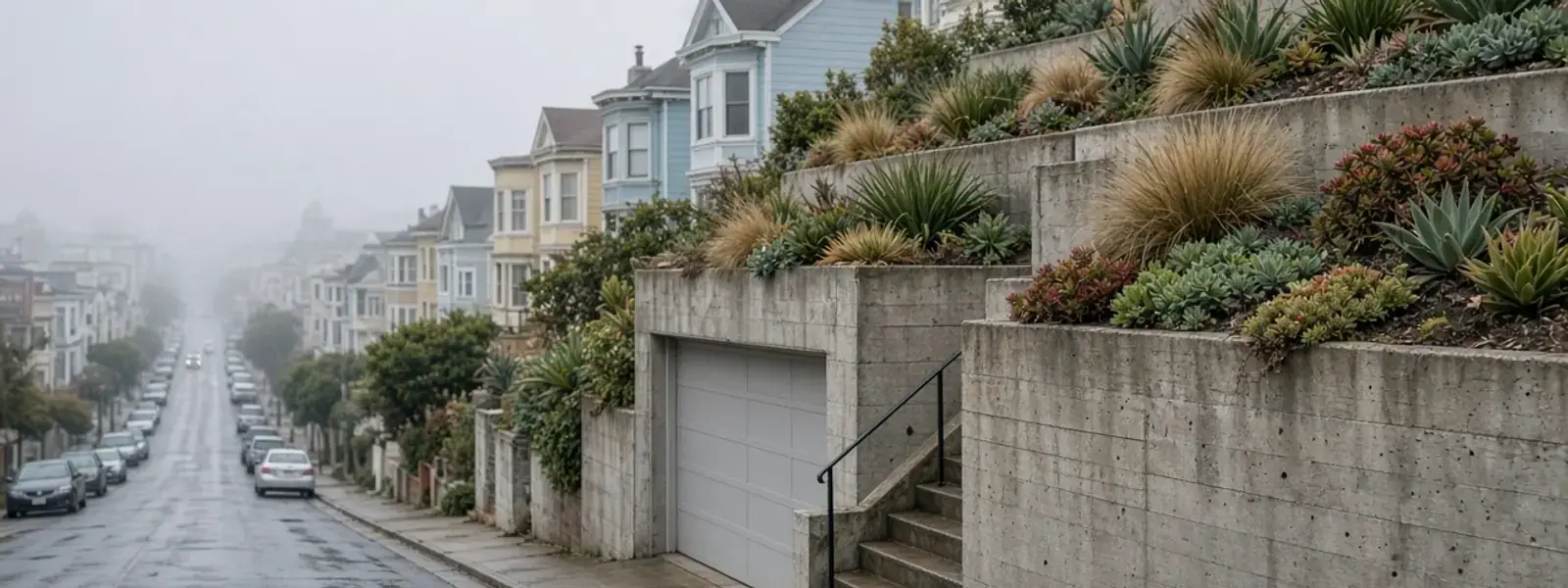
Retaining walls in Daly City deal with sandy, erodible soil, steady wind and fog, and the steep lots behind the mid-century tract homes. San Fran Retaining Wall Pros builds walls in Daly City that handle those conditions, including reinforced block, concrete and drainage upgrades for slopes that shed sand every time it rains.
Sand, wind and a lot of fog
Daly City sits at the north end of the San Francisco peninsula, directly in the path of the cold ocean fog. The weather is cool and damp for much of the year, and the wind off the Pacific is steady.
The soil in many parts of the city is sandy and loosely cemented, especially closer to the coast. It drains quickly when it's compacted and it erodes quickly when it isn't. Add a heavy rain and a slope with no vegetation and you can lose a lot of soil in one storm.
That matters for retaining walls in two ways. Sandy soil doesn't hold itself up at steep angles, which makes walls more necessary. And it washes out from behind and under a wall if drainage and filter fabric aren't right.
The tract-home lots: Westlake, Serramonte, Broadmoor and beyond
Much of Daly City was built in the 1940s through the 1960s as tract housing. Rows of similar homes were set on the hillsides with rear yards cut into the slope. Garages tuck under the house, front yards step down to the street and back yards sit a full story higher than the house.
The walls that came with those lots were usually inexpensive. Concrete block without much reinforcement, timber, or cinder block laid without drainage. Over decades, they bulge, crack and lean.
- Block walls with horizontal cracks, which suggests soil pressure beyond what the wall was built for
- Timber walls that are rotting at the base
- Concrete walls with no weep holes, with efflorescence streaking down the face
- Back yards where a steep slope above the wall has started shedding soil
- Driveway retaining walls pulling away from the garage slab
Our repair and replacement pages explain how we decide which to recommend.
Bluffs, landslides and the San Andreas
The San Andreas Fault runs just offshore and along the north end of the city, near Mussel Rock. The coastal bluffs at the western edge are known for landslides and erosion, and the city has a long history of dealing with them.
Most residential walls are nowhere near that scale, but the same issues apply in miniature. Slopes of sandy soil can slump. Walls need footings that reach firm material and drainage that keeps water from saturating the slope. A hillside near a bluff may need geotechnical review before any wall is designed. See our hillside retaining wall page.
Wind, salt air and material choices
Coastal fog carries salt, and that affects steel. If you're using rebar, keep the right cover. If you're using metal baskets for a gabion wall, pick a coating built for the coast. Wood fences on top of walls take a beating from the wind, so posts and footings should be sized for it.
- Reinforced concrete with proper cover handles salt air well
- Reinforced block with fully grouted cells and sealed caps lasts
- Pressure-treated timber rated for ground contact works for lower walls
- Alloy or PVC-coated gabion baskets resist coastal corrosion
Permits and process in Daly City
Daly City requires permits for walls over four feet from the bottom of the footing to the top, and for walls that carry a surcharge. Walls on slopes may also need grading review. Retaining walls near the lot line may need a survey to establish the boundary.
- We visit the lot, measure the slope and look at what's there
- We sketch the wall and discuss materials
- Engineering and permit submittals are prepared if needed
- We set up access, demolition and erosion control
- We build the footing, drainage and wall
- We finish grade and leave surface drainage working
Daly City neighborhoods and what we see
- Westlake and Pacific Manor. Mid-century homes on rolling sandy ground, with short walls in front and back-yard terraces. Wind and fog are constant.
- Serramonte and Southern Hills. Hillside lots with tall back-yard cuts and driveway walls. Block walls from the 1960s are showing their age.
- Broadmoor and Original Daly City. Older homes, smaller lots and the occasional clay pocket. Brick and stucco-faced walls are common.
- Crocker and Bayshore edge. Steep slopes toward the bay, fast runoff and exposed soil. Gabion and boulder walls help on erosion-prone ground.
- Coastal edge. Bluff-top lots with erosion, wind and salt. Geotechnical review is the first step.
Because so much of the housing stock is similar, the same few mistakes repeat down the block. We recognize them, and we can usually explain why the wall next door failed.
What we look for on a Daly City visit
- Sand or soil washing from under the wall footing or out of weep holes
- Horizontal cracks in block walls, especially at the third or fourth course
- Roof drainage that dumps directly behind a wall
- Slope above the wall with bare soil or ice plant that no longer holds the slope
- Fence posts on the wall that tilt in the wind
- Cracks or settlement in driveways and slabs above the wall
On sandy slopes, the cure is often cheaper than people expect when the problem is found early: drainage, regrading and a small wall or a replacement for the worst section.
A typical Daly City job
A homeowner on a hillside street has a block wall at the rear of the yard that's started bowing and cracking horizontally. The house sits below the slope, so a failure would bury the patio.
We recommend replacing it with a reinforced concrete or fully grouted block wall on a new footing, with a drain and weep holes. The old wall comes out in sections so the slope is never left unsupported. Surface water is directed to a safe outlet, and the slope gets erosion control and planting.
Daly City retaining wall FAQ
Why is my Daly City retaining wall bulging?
Most often it's soil or water pressure the wall wasn't built for. Older block walls often lack steel and drainage. A look at the cracks and the soil behind it tells us whether it can be repaired or needs to be rebuilt.
Does Daly City's sandy soil change how walls are built?
Yes. Sand drains well, but it washes out if fabric and rock aren't set right. It also doesn't hold a steep angle, so slopes above walls need attention too.
Do I need a permit for a retaining wall in Daly City?
Walls over four feet from the bottom of the footing to the top, or with a surcharge, generally need one. Hillside work may add grading review.
What wall works best behind a Daly City tract home?
Reinforced block or poured concrete usually suits steep, narrow back yards. Terraced block or timber works for lower grade changes.
Can wind damage a retaining wall?
Wind itself doesn't, but fences and trellises on top of a wall can transfer wind load into it. We account for that when we size footings and posts.
Retaining wall services in Daly City
Every service below is available in Daly City. Pick the one that matches your wall.
- Retaining Wall Installation
- Retaining Wall Repair
- Retaining Wall Replacement
- Concrete Retaining Walls
- Cinder Block Retaining Walls
- Wood Retaining Walls
- Stone Retaining Walls
- Boulder Retaining Walls
- Interlocking Block Retaining Walls
- Gabion Retaining Walls
- Retaining Wall Drainage
- Hillside Retaining Walls
Nearby: South San Francisco, Pacifica, Brisbane. Or see every city we work in.