The short answer
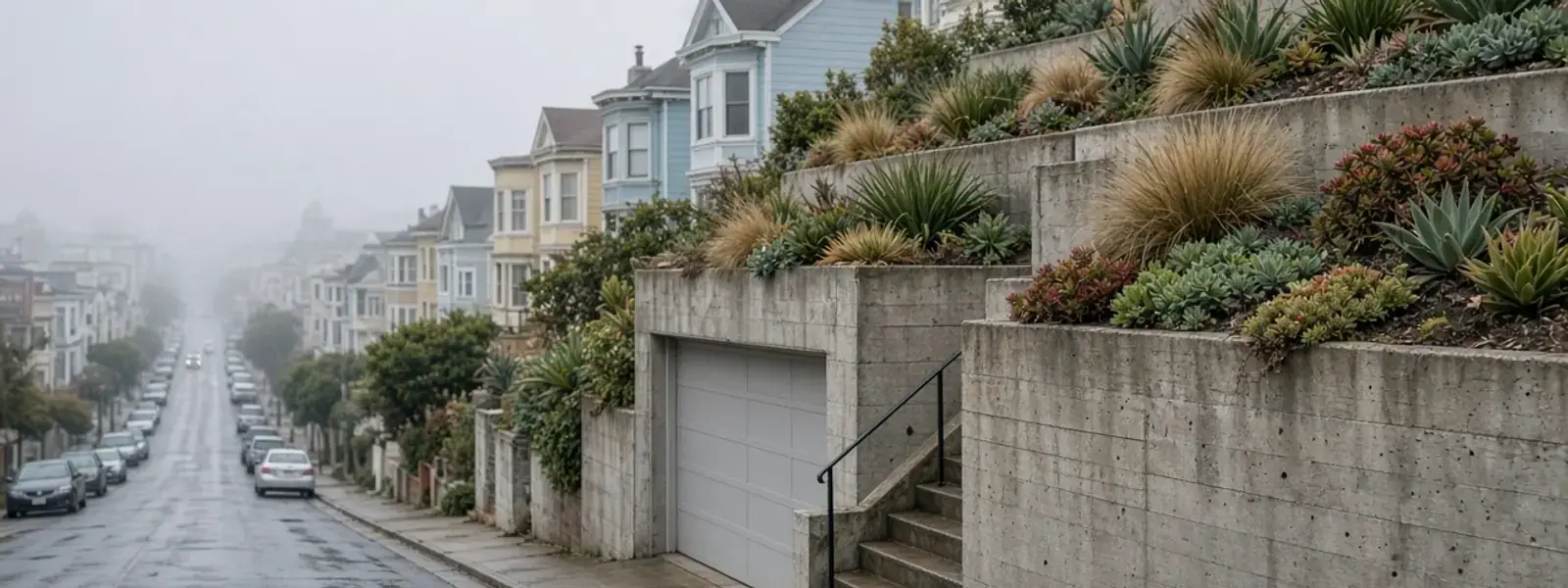
Retaining walls in San Rafael cover a wider range than almost anywhere in Marin: flat Canal-area lots with high groundwater, mid-century hillside neighborhoods like Terra Linda and Dominican, and steeper lots in Gerstle Park and Peacock Gap. San Fran Retaining Wall Pros builds walls across San Rafael with the right footing and drainage for each type of ground.
San Rafael is a lot of different places
San Rafael runs from the bay edge to the ridge. The Canal district and parts of downtown are flat and close to sea level. Terra Linda and Marinwood are mid-century tract neighborhoods on gently rolling ground. Dominican, Gerstle Park, Sun Valley, Bret Harte and Peacock Gap are hill lots, some steep.
Each of those has different soil, different water behavior and different wall needs. A good wall in the Canal isn't a good wall on Gerstle Park.
Expansive clay and the cracking cycle
Much of San Rafael sits on clay-rich soil. Wet winters swell it and dry summers shrink it. Over years, that cycle moves walls, cracks slabs and opens gaps between the soil and the wall.
- Clay holds water and pushes harder on walls than free-draining soil
- Shrinkage cracks let rain reach the base of the wall
- Fill and slope creep add to lateral load
- Tree roots in clay can pull water and shrink soil, causing settlement
- Irrigation near the wall feeds the cycle
Free-draining rock behind the wall, filter fabric and a good outlet are non-negotiable. See our drainage page.
Canal, downtown and low-lying lots
The flat areas by the bay have soft soil, high groundwater and flood exposure. Walls here are usually shorter: raised planters, patio edges, driveway ramps and garden terraces. But a short wall on soft ground still needs a proper base.
| Concern | Response |
|---|---|
| Soft soil | Wider footing, compacted base |
| High water table | Drainage, waterproofing, sump if needed |
| Flood or tidal exposure | Concrete or block with sealed surfaces |
| Corrosion | Proper concrete cover and corrosion-resistant hardware |
Terra Linda, Dominican and the hill neighborhoods
Mid-century neighborhoods like Terra Linda have homes built on slabs, with rear yards that step down. Eichler and similar homes are sensitive to water near the foundation, so drainage behind the wall also protects the house.
In the steeper hill neighborhoods, walls hold driveways, terraces and uphill cuts. Reinforced block, concrete and interlocking block are the common choices.
Wall near your slab?
A wall too close to a foundation can pull water toward it or add pressure. We look at how the wall and the house work together.
Permits and local rules
Walls over four feet from the bottom of the footing to the top and walls with a surcharge need building permits and engineered drawings. Hillside lots, creek-side lots and lots with protected trees may have extra review.
- Walk the lot and look at soil, slope and drainage
- Choose the wall type
- Engineering and permit, if needed
- Footing, drainage and wall construction
- Backfill, grading and finish
San Rafael neighborhoods and walls
- Canal District. Low-lying, soft soil and flood exposure. Walls are low and footings matter.
- Terra Linda and Marinwood. Mid-century tract homes on gentle slopes with back-yard terraces.
- Gerstle Park and Dominican. Older homes on steeper lots, with stone, brick and concrete walls.
- Sun Valley and Bret Harte. Hillside lots with clay soil and seeps.
- Peacock Gap and Lucas Valley. Larger lots with hill terrain, wind and fire rules.
What we check on a San Rafael visit
- Clay soil cracks and gaps around the wall
- Groundwater near low-lying walls
- Slab or foundation proximity
- Drainage from roofs and driveways
- Tree roots in clay soil
- Creek and flood setbacks
A typical San Rafael job
A Terra Linda back yard has a block wall about three feet tall that's cracking and tilting. Clay soil behind the wall is saturated, and the slab of the house is a few feet away.
We replace it with a reinforced block wall on a continuous footing, with a drain that carries water away from the slab. The surface is graded so water leaves the yard, and the finish matches the house.
San Rafael retaining wall FAQ
Why does San Rafael clay cause so much wall trouble?
It swells and shrinks with moisture, and it holds water. That means more pressure on the wall and more movement over time. Free-draining backfill and a solid drain help.
Can you build a wall in the Canal district?
Yes. Low-lying lots need wider footings, good drainage and attention to groundwater and flood risk.
Do I need a permit in San Rafael?
Generally for walls over four feet from the bottom of the footing to the top and walls that support a surcharge. Hillside and creek rules may also apply.
What wall is best for a steep Gerstle Park or Dominican lot?
Reinforced concrete or block for tall walls, with strong drainage. Terraced stone or block for gentler slopes.
Will a wall near my house affect the foundation?
It can if drainage is wrong. A wall that sends water toward the house is a problem. We design drainage to protect both.
Retaining wall services in San Rafael
Every service below is available in San Rafael. Pick the one that matches your wall.
- Retaining Wall Installation
- Retaining Wall Repair
- Retaining Wall Replacement
- Concrete Retaining Walls
- Cinder Block Retaining Walls
- Wood Retaining Walls
- Stone Retaining Walls
- Boulder Retaining Walls
- Interlocking Block Retaining Walls
- Gabion Retaining Walls
- Retaining Wall Drainage
- Hillside Retaining Walls
Nearby: Mill Valley, Tiburon, Sausalito. Or see every city we work in.